The full library
Click straight in — nothing to install, nothing to log into.
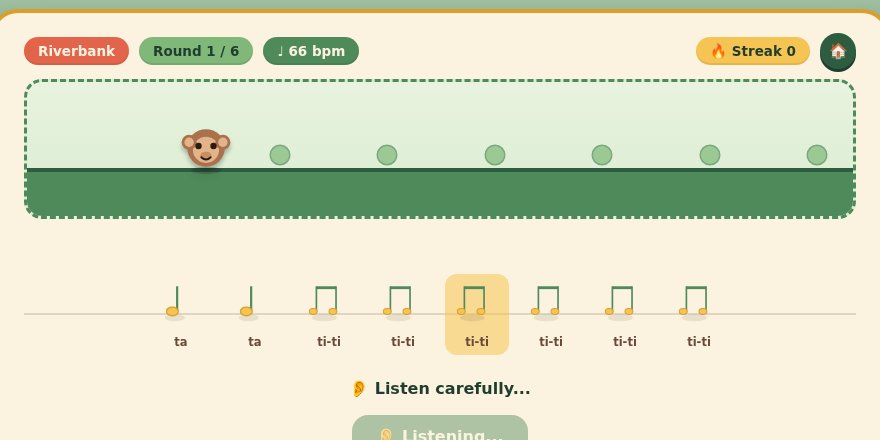
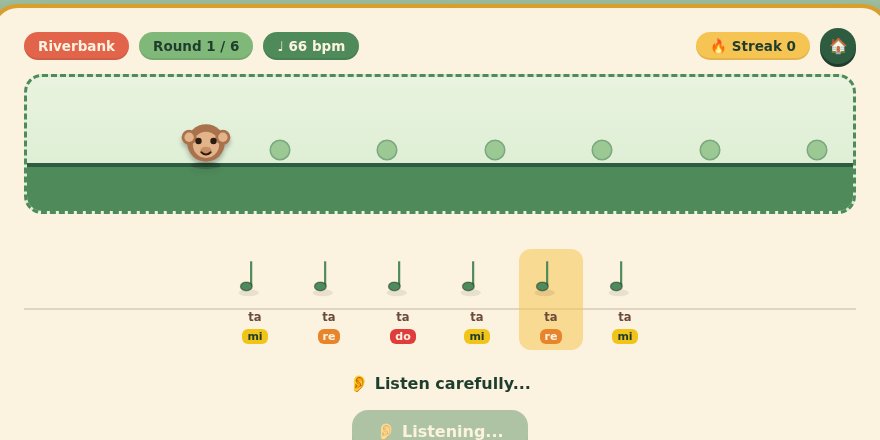
Tap back rhythm patterns by ear across seven jungle levels, building from ta and ti-ti up through to sixteenth-note combinations at increasing tempo. Notation appears as you go, so students can connect what they hear to what it looks like.
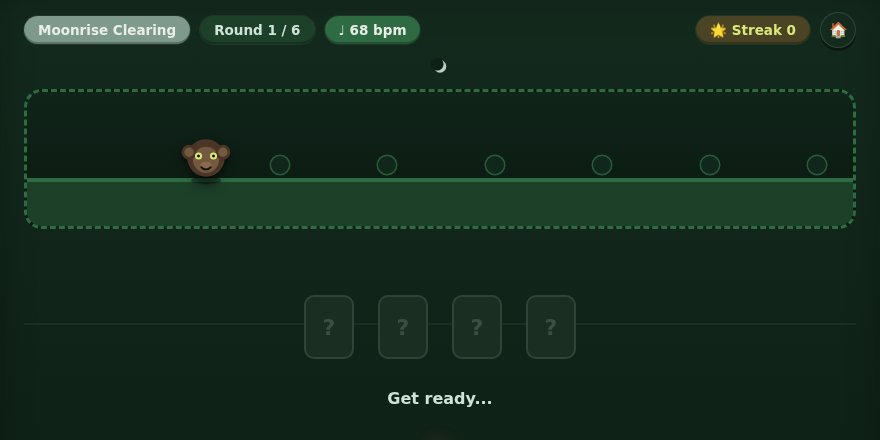
Play nowThe same jungle trek, but after dark — no notation shown while the pattern plays, so students have to inner hear before they can tap or notate it. A blind dictation drill across five levels.
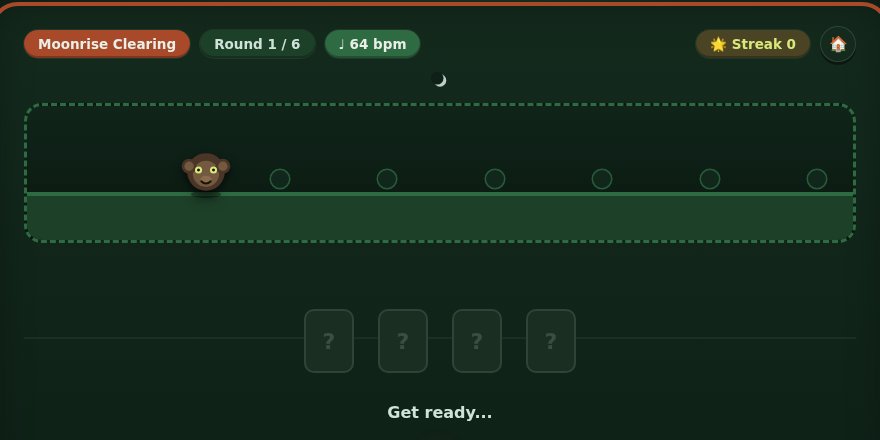
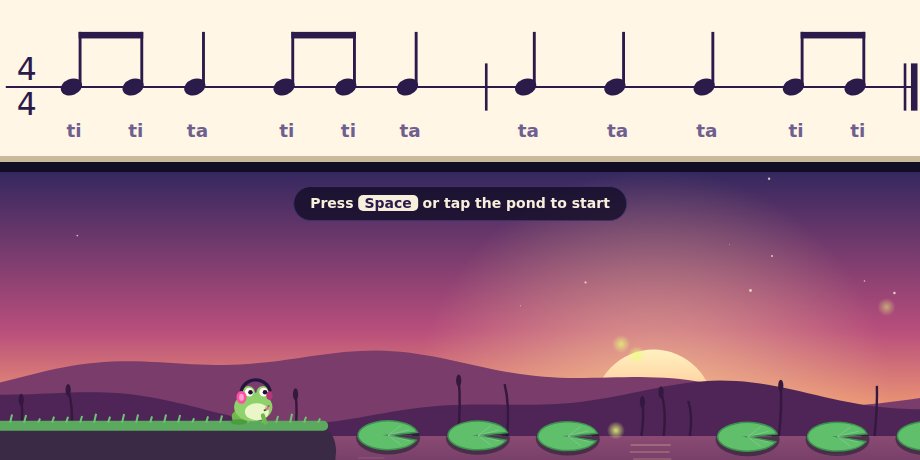
Play nowA heist-themed dictation game built for compound time. Crack seven rooms of a vault by tapping back 6/8 rhythms — the tempo and the stakes climb!
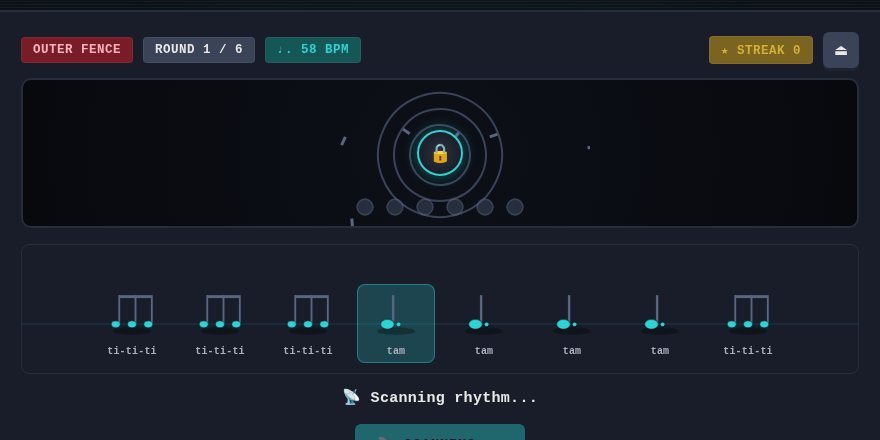
Play nowA 12-bar-blues lounge sets the scene for call-and-response rhythm dictation — listen to the band's 2-bar call, then tap or spacebar the pattern straight back in swung eighths. Three sets build from straightforward ta and ti-ti up through off-beat si-ti to full syncopation.
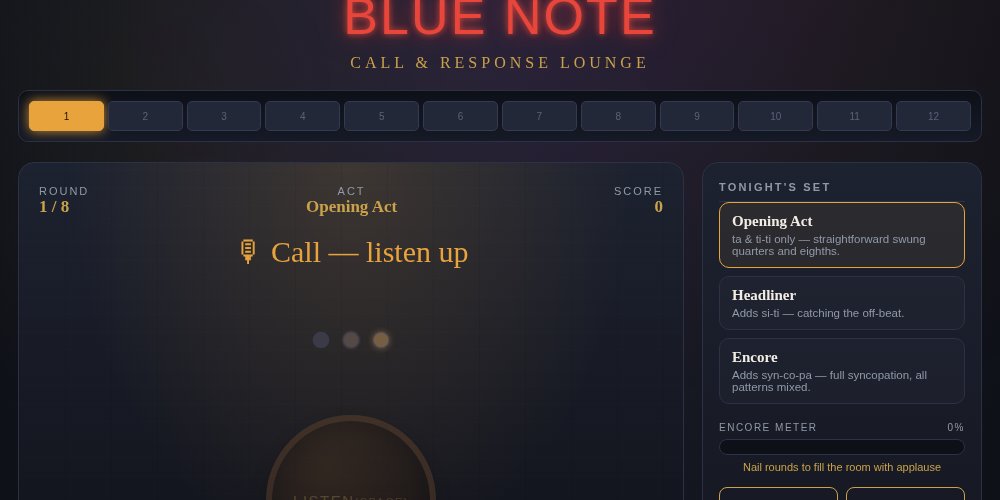
Play nowThe toughest combination in the series: blind rhythm dictation and solfège entry, with no notation visible while the pattern plays. By the final level students are dictating both rhythm and the full pentatonic set purely by ear.
Play nowHear a short phrase, then pick the squiggle that matches its melodic contour — charting a course across four increasingly demanding voyages, from three gentle pentatonic pitches up to the full diatonic scale with close, easily-confused intervals.
Play nowPicks up where the first voyage left off — longer phrases, denser rhythms, and a course that pushes all the way to the full octave. Built for ears that already know their pentatonic bearings.
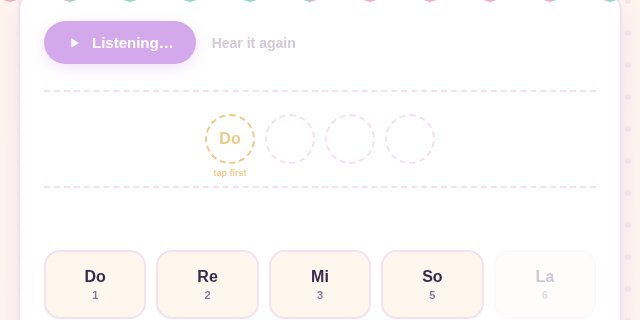
Play nowHear a short pentatonic phrase and write down the solfa, one syllable at a time — a focused listening and notation drill to build on the dictation skills from the rest of the library.
Builds on Jungle Rhythm Safari by adding solfège — students enter do–re–mi–so–la using number keys as the pentatonic set grows note by note across five levels, alongside the rhythm tapping.
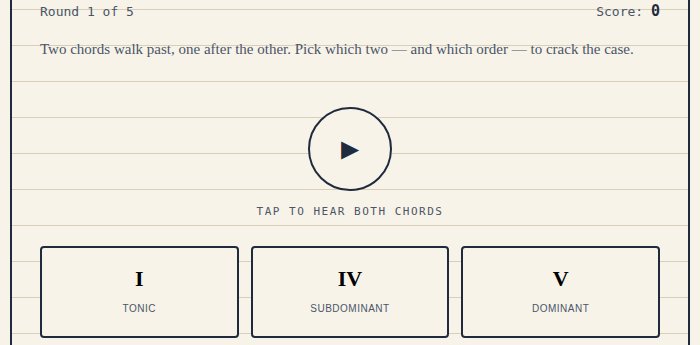
Play nowThe case file that started it all — identify I, IV and V by ear in root position, levelling up from two-chord recognition through four-chord sequences to a race-the-clock final case.
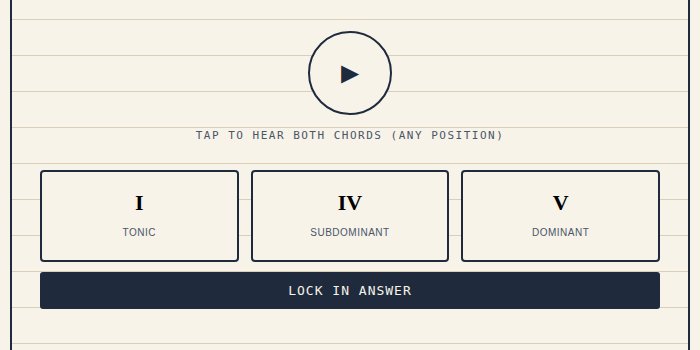
Play nowSame I–IV–V case work, with inversions added to the mix — students have to listen past the bass note to identify the chord underneath, not just match a familiar bassline.
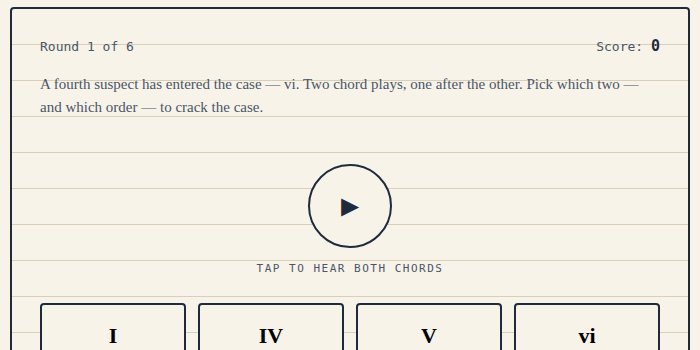
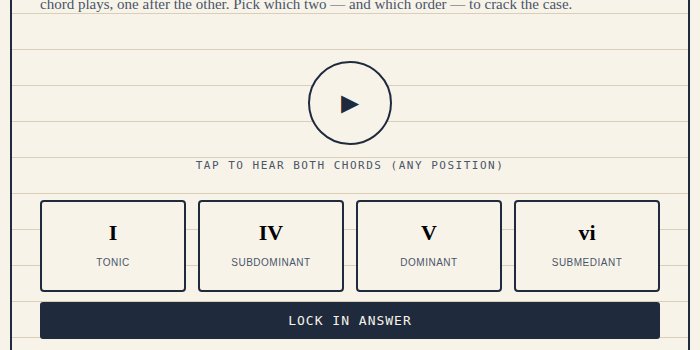
Play nowThe detective squad takes on a fourth suspect — the vi chord joins I, IV and V in root position, sharpening the ear for the relative-minor colour against the major-key cases.
Play nowThe full case load: I, IV, V and vi, with inversions back in play. The most demanding chord ID challenge in the series, built for students who've already cracked the first three.
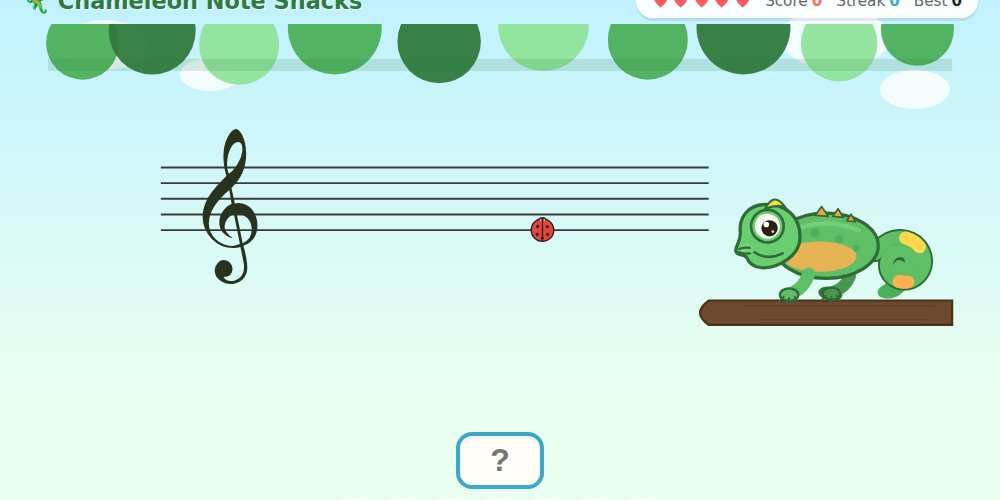
Play nowA colourful bug crawls across the treble clef staff toward a hungry chameleon — name the note before it arrives. Each bug shape always matches the same note, so pattern recognition builds fast. Speed ramps up the better you get.
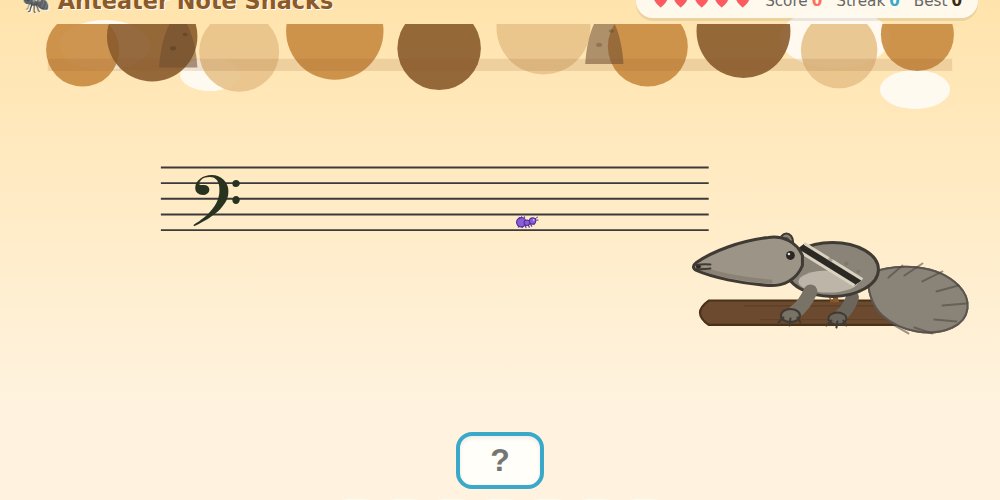
Play nowThe bass clef version — ants march across the staff toward an anteater's waiting tongue. Same fast-paced note-naming mechanic as Chameleon Note Snacks, built for students who are ready to take on the bass clef.
Play now