No screens required

Unplugged classroom activities.

Game-based musicianship activities built for the room, not the browser — trialled in the real classroom and ready to print or run with minimal materials.

Rhythm Walk

Multiple players Whole class Rhythm

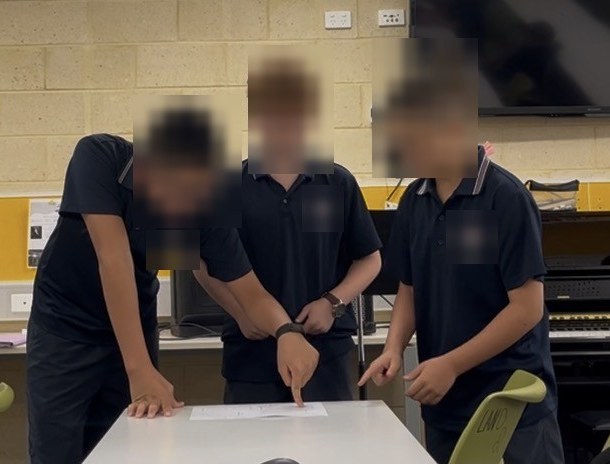
Students walk a four-beat path of symbols — circles and hands — tapping the rhythm as they go while the teacher keeps the beat on claves. A physical, whole-body way to internalise steady beat and rhythm syllables before they ever hit a page.

Full instructions

How it works

  1. Create a four-beat path with two symbols placed side by side.
  2. Students line up and take turns walking the path while tapping the rhythms or symbols shown.
  3. The teacher keeps the beat on the claves.

Rules

  • Must stay on the beat (kept by the clave or metronome).
  • Aim for no rests between each 4-beat pattern. If rests are needed, give a four- or eight-beat count-in before the next student starts.
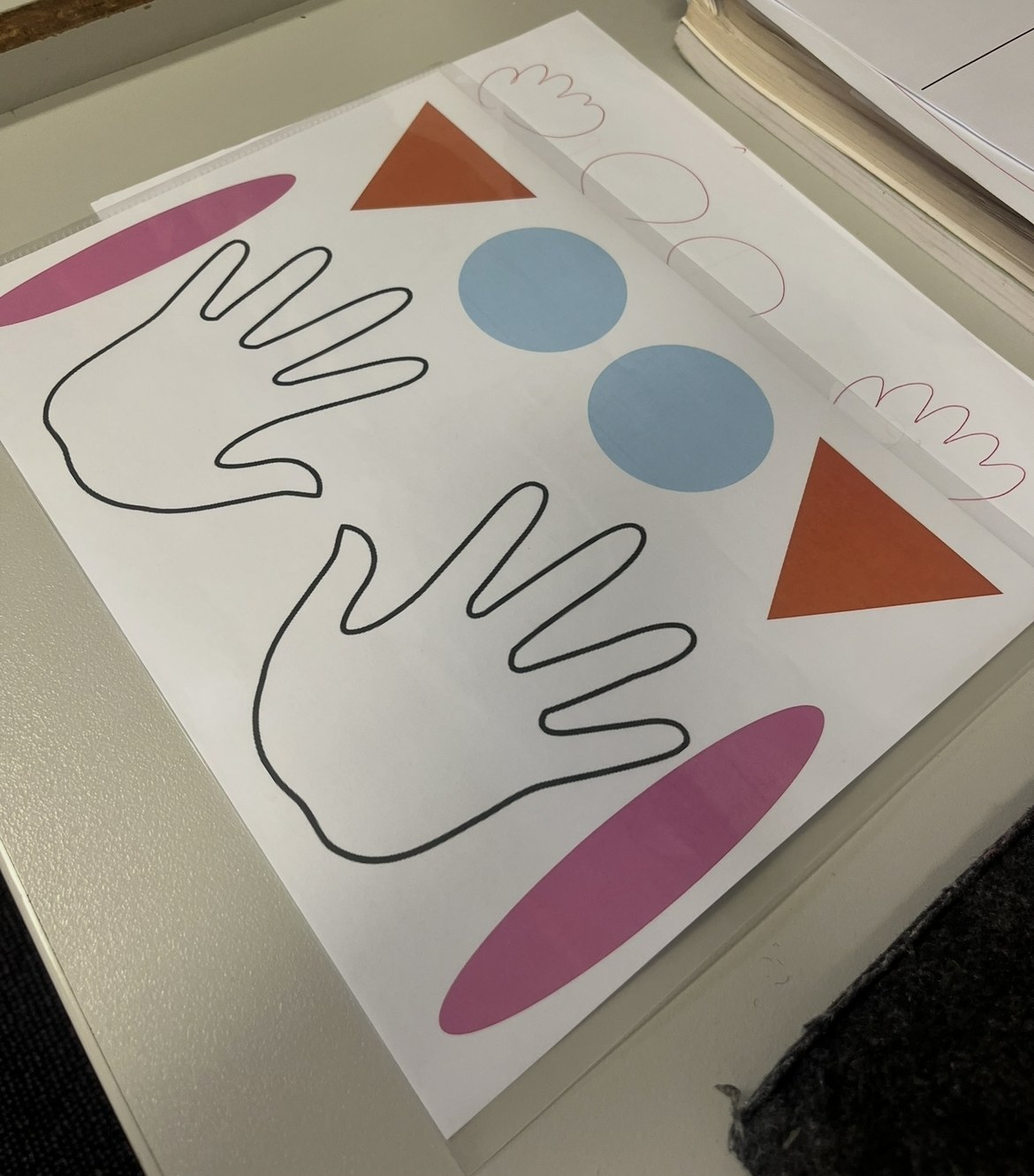
  • Symbols (always one-beat rhythms): Circle — fist tap (ta); LH hand — hand tap (ta); RH hand — hand tap (ta).
  • If rhythms like ti-ti or ti-tika are placed next to a hand or circle symbol, it means to play that rhythm using whichever hand or fist was shown.

Possible additions

  • Everyone sings a song while performing the rhythms.
  • Play a funky track in the background — start slower and build up the tempo.

Materials

  • Portable speaker and funky music
  • Rhythm Walk symbol sheets
  • Rhythm Walk rhythm sheets
Download Rhythm Walk symbol sheets (PDF) Download Rhythm Walk rhythm sheets (PDF)

Suggested levels

Level 1Only hand and circle symbols
Level 2Add ti-ti
Level 3Add ti-tika, tika-ti
Level 4Add tika-tika

Crash Out Kit

Multiple players Whole class Rhythm

A copy-back rhythm game on a hand-percussion "kit" — the teacher (or a student) performs a four-beat pattern and the class copies it straight back, building from steady ta through to mirrored two-hand syncopation.

Full instructions

How it works

  1. Each student receives a Crash Out Kit sheet.
  2. The teacher performs a four-beat pattern using the kit.
  3. Students copy the teacher's four-beat pattern.

Alternatively

  1. The teacher keeps the beat on claves (or a metronome in the background).
  2. Students sit in a circle and take turns improvising four-beat patterns on the kit, with the rest of the class immediately copying back.

Rules

  • Must stay on the beat (kept by the clave or metronome).
  • Both hands must mirror each other (at least for the first three levels).
  • No rests between the four-beat patterns.

Possible transitions

Dictate the last bar (or bar two, three, etc.) of the rhythm performed on the 4-beat circle sheet, then link into completing a solfa dictation underneath the written rhythm using individual whiteboard markers.

Materials

  • Crash Out Kit sheet
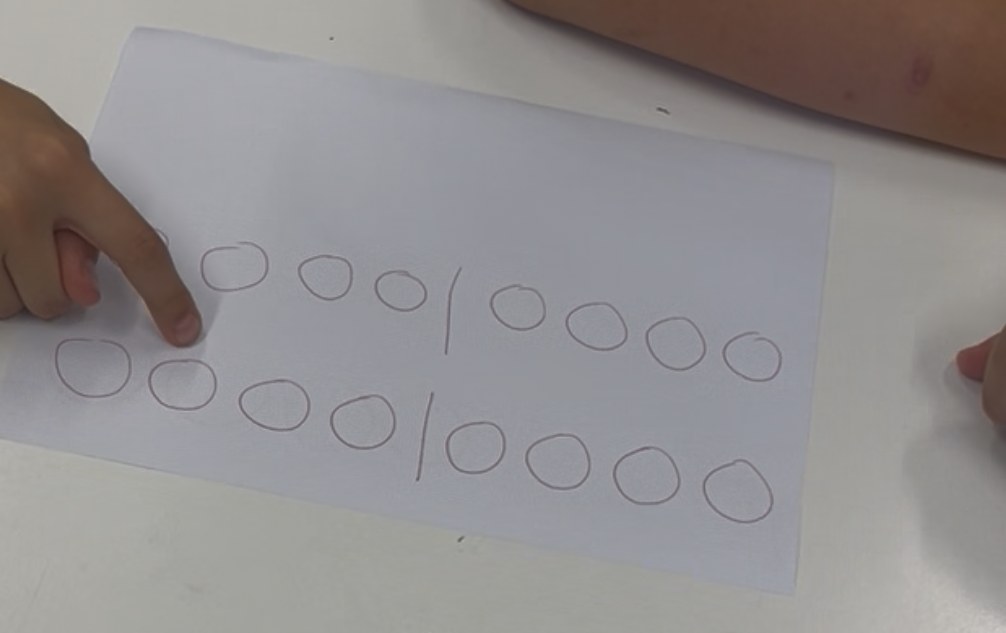
  • Laminated 4-beat circle sheet
  • Individual whiteboard markers
Download Crash Out Kit sheet (PDF) Download 4-beat circles (PDF)

Suggested levels

Level 1Ta
Level 2Add ti-ti
Level 3Add tika-tika
Level 4Add ti-tika, tika-ti
Level 5Same rhythms above, but hands no longer need to mirror each other

Rhythm Lineup

4–8 players Small group Rhythm

Each student memorises one bar of a four-bar rhythm, writes down what they heard, then the class has to physically reorder themselves into the correct sequence once the teacher reclaps it jumbled up. Listening, memory, and notation all in one activity.

Full instructions

How it works

  1. Each player is designated a bar to memorise (e.g. bar 1, 2, 3, or 4 — up to 8).
  2. The teacher claps a four-bar rhythm.
  3. Each student writes down what their bar was.
  4. The teacher claps back the four-bar rhythm again for students to make adjustments.
  5. Once all correct, the teacher re-claps the bars in a jumbled order.
  6. Students move into the correct number order and hold up their rhythms.

Alternatively

Level up by playing the rhythm as a melody (rhythm in context). Play or sing the four-bar rhythm and have students complete the same activity — this gets them practising listening to "music" while still only deriving the rhythm. You can also transition this into a melodic dictation.

Rules

  • No talking allowed.

Notes

  • Try it with one group up the front demonstrating while the rest of the class watches, then say the rhythms together as a class once the shuffle is complete. Swap groups and repeat.
  • Students can also complete this as a dictation on laminated beat circles while watching the demonstration group.

Materials

  • Whiteboard and markers
  • Laminated 4-beat circles sheet
  • Laminated 16-beat circles sheet
  • Individual whiteboard markers
Download 4-beat circles (PDF) Download 16-beat circles (PDF)

Suggested levels

Level 1Ta
Level 2Add ti-ti
Level 3Add tika-tika
Level 4Add ti-tika, tika-ti
Level 5Add tim-ka
Level 6Add ka-tim

Point Copy Clap

2–3 players Pairs Rhythm

A back-and-forth improvisation game for pairs: one player claps a two-bar rhythm while the other points along the beat, then they swap, copying back the last bar each time and improvising a new one. Builds fluency with a teacher-set rhythm bank.

Full instructions

How it works

  1. Player 1 improvises a two-bar rhythm while Player 2 points at the beat circles in time.
  2. Player 2 copies back Player 1's last bar, then improvises a new second bar.
  3. Player 1 copies back Player 2's last bar, then improvises a new second bar.
  4. Repeat back and forth, adding more rhythms into the rhythm bank or increasing tempo.

Rules

  • Each player must point to each beat circle in time while the other player performs their rhythm.
  • Players must stay in time with the metronome — there are no rests between each player's two-bar rhythms.
  • Players may only use rhythms from the rhythm bank specified by the teacher.
  • The teacher can keep time for the whole class while pairs work, or run it as a trio where a third student keeps the beat and rotates in.

Materials

  • 16-beat circle sheets
  • Whiteboard and markers, to write up the rhythm bank
Download 16-beat circles (PDF)

Optional: individual rhythm cards to place in the rhythm bank.

Suggested levels

Level 1Ta, ti-ti, tikatika
Level 2Add za
Level 3Add ti-tika (remove tikatika)
Level 4Add tika-ti (remove tikatika)
Level 5Add tim-ka (remove ti-tika, tika-ti)
Level 6Add ka-tim (remove ti-tika, tika-ti)
Level 7Add syn-co-pa (remove tim-ka, ka-tim)

Rhythm Shuffle

4–8 players Small group Rhythm

Each student is given a single rhythm card. The teacher claps a sequence, and students have eight beats to silently sort themselves into the order they heard — then clap it back together in time.

Full instructions

How it works

  1. Each student is designated a single rhythm (e.g. ta, titi, tikatika, or za).
  2. The teacher claps the rhythm sequence.
  3. Students move into the correct order within eight claves or metronome beats.
  4. Students then clap it back, in time with the claves or metronome.

Rules

  • No talking allowed.

Notes

Try it with one group up the front demonstrating while the rest of the class watches, then perform the rhythms together as a class once the shuffle is complete. Swap groups and repeat.

Possible transitions

Use the final shuffled rhythm to turn this into a melodic dictation: write the completed rhythm on the board, then sing or play a new melody over it for students to sing back. As a class, work out the starting and ending pitch and dictate the solfa on the board.

Materials

  • Individual rhythm cards (e.g. ta, titi, tikatika, za)

Suggested levels

Level 1Ta
Level 2Add ti-ti
Level 3Add tika-tika
Level 4Add ti-tika, tika-ti
Level 5Add tim-ka
Level 6Add ka-tim

Melodic Jumble

Multiple players Whole class Pitch

Four rhythm-and-solfa cards go up on the board in a random order. The class sings through them together, then has to listen, sing internally, hand-sign, and finally perform the melody back in the correct shuffled order.

Full instructions

How it works

  1. Place four rhythm and solfa cards (four beats each) in a random order on the whiteboard.
  2. Sing through each of the cards together as a class.
  3. The teacher sings or plays the cards in a random order — students listen only the first time, sing along in their heads the second time, and hand-sign along the third time.
  4. Students sing and hand-sign the melody out loud, in the correct order.

Alternatively

Level up by extending the sequence to eight bars long.

Materials

  • Rhythm and solfa cards (downloadable from the Kodály website — cut, laminate, and magnetise)
  • Whiteboard and markers, if writing the cards up manually

Suggested levels

Level 1Ta and ti-ti with d r m
Level 2Ta and ti-ti with d r m s
Level 3Ta and ti-ti with d r m s l
Level 4Add tika-tika with d r m s
Level 5Add tika-tika with d r m s l

Repeat the levels above using the la pentatonic.

Crack the Code

3–4 players Small group Rhythm

Four two-bar rhythms go up on the board, numbered 1–4. The teacher claps them in a random order, and students — each "assigned" a number — have to work out and physically reorder into the code that was clapped.

Full instructions

How it works

  1. Each player is designated a two-bar rhythm (four two-bar rhythms are pre-written on the board, numbered 1, 2, 3 and 4).
  2. The teacher claps the two-bar rhythms in a random order.
  3. Students move into the correct number order that was clapped by the teacher.

Rules

  • No talking allowed.
  • Students can only move after the full rhythm has been clapped by the teacher.
  • Students have four beats to get into order, with the teacher keeping time on the claves.

Alternatively

Run this solely with the teacher at the board and hands up for students to call out the code, or have students write the code on post-it slips as an exit ticket.

Materials

  • Whiteboard and markers, to write the two-bar rhythms and the rhythm bank
  • Clave, bell, or metronome

Optional: laminated rhythm cards, individual rhythm cards for the rhythm bank, post-it slips.

Suggested levels

Level 1Ta, ti-ti, tikatika
Level 2Ti-tika, tika-ti
Level 3Tim-ka, too-oo
Level 4Syn-co-pa (ti-ta-ti)

Solfa Smuggler

Whole class / individual Pitch

Students write down a short pentatonic phrase by ear, one solfa syllable per box on a dictation strip — sung or played in secret as the “contraband” before the round timer runs out.

Full instructions

How it works

  • Each student has a dictation strip with five blank boxes.
  • The teacher sings or plays a short pentatonic phrase, written in solfa, in their head as the “contraband.”
  • Students write down the solfa they hear, one syllable per box, before the round timer runs out.
  • After the phrase has been sung three times, strips go face down. The teacher reveals the correct solfa on the board.
  • Students self-mark and reveal their score by holding up fingers (0–5 correct).

Rules

  • No talking or comparing strips during the listening rounds.
  • Only three hearings allowed per phrase — after that, pencils down.
  • Each correct syllable in the correct box scores one point; a perfect strip scores a bonus point.

Level up

Run it as a knockout — anyone who scores under 4/5 sits out the next round (or swaps to scorekeeper) until only a few “smugglers” remain. Keep a running tally on the board across the term as a class leaderboard.

Possible transitions

Use the most-missed phrase from the round as the starting point for a class composition — students suggest a rhythm to set the solfa to, and you build out the missing two bars together.

Materials

  • Solfa dictation strips (template provided)
  • Pencils
  • Whiteboard and markers for the reveal
Download dictation strips (PDF)

Suggested levels

Level 1Do–re–mi only, stepwise
Level 2Add so, stepwise
Level 3Add la, stepwise
Level 4Add leaps (so–do, do–la)
Level 5Add low la and low so

Spot the Fake

Whole class, teams of 2–3 Pitch

A short solfa phrase goes up on the board as the “original.” The teacher sings it back — sometimes exactly, sometimes with one note changed — and teams vote real or fake using hand signals only.

Full instructions

How it works

  • A short solfa phrase (4–6 syllables) is written on the board — this is the “original.”
  • Teams sing through the original together once to lock it in.
  • The teacher sings a version that either matches exactly or has one note changed (the “fake”).
  • Teams confer silently using hand signals only — thumbs up for “real,” thumbs down for “fake.”
  • On the count of three, all teams reveal their vote at once. Correct teams score a point; if a team correctly identifies which note changed, they score a bonus point.

Rules

  • No speaking allowed during team discussion — hand signals and pointing only.
  • Votes must be revealed simultaneously; early reveals forfeit the point.
  • The teacher may sing the “fake” using a deliberately tricky substitution (e.g. a neighbouring note) to raise the difficulty.

Level up

Hand the reins to a student “forger” each round — they choose (and sing, or whisper to the teacher to play) whether to keep it real or fake it, while the rest of the class votes. Rotate the forger role each round so everyone gets a turn.

Possible transitions

Once a fake is correctly spotted, ask the class to dictate the exact note that changed and rewrite the original phrase as a two-bar rhythm, ready to clap or perform.

Materials

  • Whiteboard and markers
  • Pre-written or laminated solfa phrase cards (optional)

Suggested levels

Level 1d r m s only, one obvious substitution
Level 2Add la
Level 3Add do’
Level 4Two notes may be changed instead of one
Level 5Add low la and so, two substitutions

Phrase Heist

Pairs or groups of 3 Pitch

Pairs race to flip and lay out solfa cards from their “vault” in the order they hear a sung phrase — first to lay out a fully correct phrase calls “vault cracked” and scores the point.

Full instructions

How it works

  • Each pair gets a shuffled set of solfa cards (several of each syllable) face down on the desk — this is their “vault.”
  • The teacher sings a 4–6 note phrase, two to three times.
  • Pairs race to flip and arrange the correct cards, in order, left to right on the desk.
  • The first pair to lay out a fully correct phrase calls “vault cracked” and scores a point.
  • The teacher reveals the correct order on the board so all pairs can self-check before the next round.

Rules

  • Cards must be laid out in a single row, left to right — no stacking or overlapping.
  • Only the phrase as sung counts; rearranging after “vault cracked” has been called disqualifies that round.
  • Pairs may only use the cards in front of them — no borrowing from neighbouring vaults.

Level up

Add a rhythm layer: once a pair has the correct solfa order, they must also clap the rhythm in time before the point is awarded. Alternatively, run it as an elimination heist — the slowest correct pair each round loses a card from their vault, making future rounds harder.

Possible transitions

Take the winning phrase from the final round and use it as that lesson’s dictation warm-up the following week, building a running “class repertoire” of cracked phrases.

Materials

  • Solfa card sets, one per pair (template provided)
Download solfa cards (PDF)

Suggested levels

Level 1Do–re–mi only, 6 cards (drm repeated)
Level 2Add so, 8 cards (drms repeated)
Level 3Add la, 10 cards (drmsl repeated)

Layer Cake

Teams of 4–6 Rhythm

A team-building ostinato game that tests how much rhythmic and vocal texture a group can stack before it collapses — think Jenga, but with grooves instead of blocks.

Full instructions

How it works

  • Each team stands in a small circle. The teacher (or a student caller) sets a steady tempo on claves or metronome.
  • The caller displays a pre-made four-beat rhythm card, randomly jumbled from the deck. The first team member performs that rhythm (body percussion or vocal “doo-bop” style) and loops it continuously.
  • Every two bars, the caller flips to a new random card and the next team member, who must enter performing whatever rhythm is now showing — without anyone stopping or losing the beat.
  • The layer keeps building until the team has four to six layers running simultaneously, or until the texture collapses (someone drops out, rushes, or drags).
  • If the team collapses, they restart from layer one — but keep the layers they already had.

Rules

  • Once a layer is in, it cannot stop until the round ends.
  • Entries must happen exactly every two bars apart — early or late entries count as a collapse.

Possible additions

Run it as a competition: which team holds the most layers the longest without collapsing?

Materials

  • Pre-made rhythm cards can be downloaded from the Kodály website.

Optional: claves or a metronome app to keep an audible pulse.

Suggested levels

Level 1Build to 2 layers. Card deck uses ta and ti-ti only.
Level 2Build to 3 layers. Add tika-tika to the deck.
Level 3Build to 4 layers. Add ti-tika and tika-ti to the deck.
Level 4Mid-groove swap: on the caller’s signal, two layer-owners must swap parts.

More on the way

Got another classroom favourite worth sharing? Send through the rules and it can be added here in the same format.